

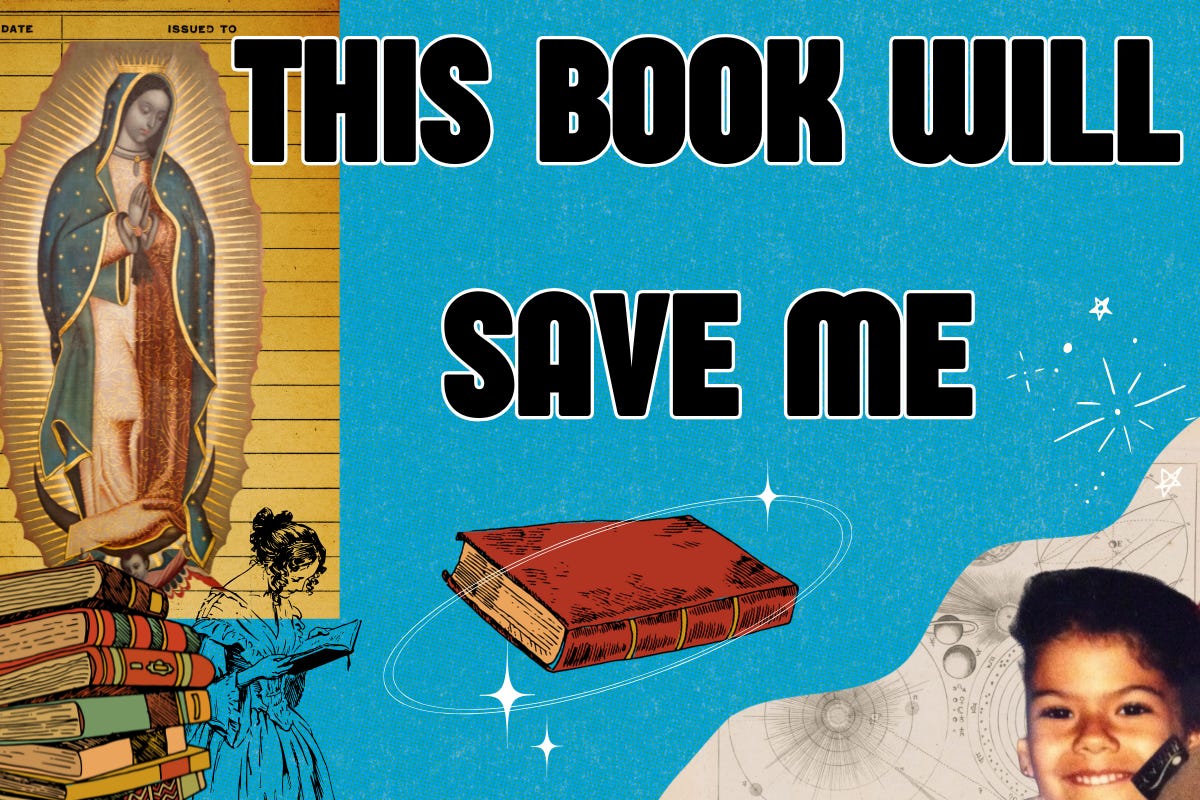
This Book Will Save Me
Hyperlexia, Catholicism, and Magical Delulu

Ask me what the perfect day would look like at any point in my life, and the answer will always include books. Barnes and Noble, the public library, a hole-in-the-wall bookstore that you can smell just by thinking about it.
If there is a heaven, surely it is has bookshelves full of things I have not read.
“Vero! I just found #hyperlexia - I’m learning so much about us,” my friend Rachel of Internet Bedroom texts me. On a comic convention trip together she shared the discovery of this syndrome that we share.
Hyperlexia is categorized as a condition where a child begins reading earlier than expected and far beyond their age group’s expected ability, usually before the age of five. This conversation we were having was amid the backdrop of the Secretary of Health and Human Services and the President announcing at random (and with zero evidence) that Tylenol causes autism (autism and hyperlexia are often though not always coexistant).
It’s true - I could read at the age of 2. In elementary school, I broke the record for the most A.R. (Accelerated Reading) points, read all the books in our library before fifth grade, and took to unironically reading the dictionary and encyclopedia.
I wanna pause here and say sincerely that this is not intended as bragging. Because if the above sentence didn’t make it clear, I was a very not fun child to be around. Unable to interact well with kids my age, I isolated by hiding in books, rinse, repeat.
Books became the safe haven, and that association was so powerful that it lasts to this day.
The placebo effect turned the sugar pill into the medicine.
“In my mind are all the tides, their seasons, their ebbs and their flows. In my mind are all the halls, the endless procession of them, the intricate pathways. When this world becomes too much for me, when I grow tired of the noise and the dirt and the people, I close my eyes and I name a particular vestibule to myself; then I name a hall.”
― Susanna Clarke, Piranesi
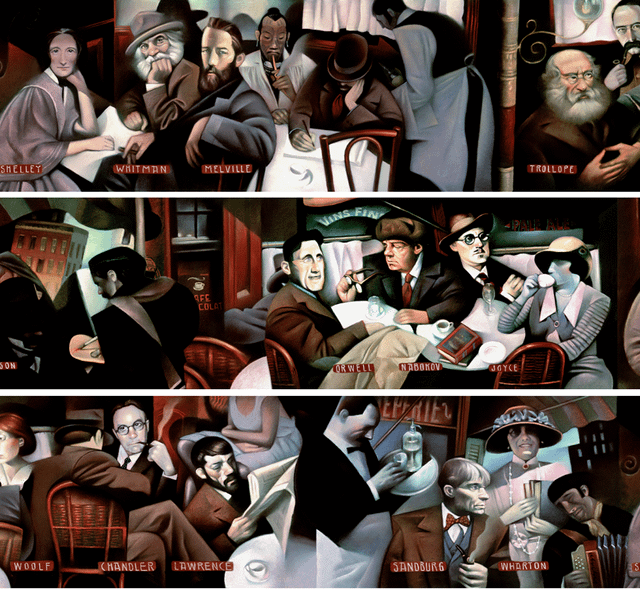
Sitting in this bookstore feels what I imagine church feels like for the devout. Sacred ground, where devils cannot stray. Even though I know this is not an objective fact, it is a soothing fiction I’ve created. A fiction so powerful that it might not be fiction any more.
Make your rounds at each station of the cross (genre). Sip the life-giving blood of Christ (coffee). Pray to the saints (authors) in the cafe mural to intercede on your behalf.
Have I beat this dead Catholic metaphor horse enough?
“Catharine instead of yielding, became stronger with the help of grace and gave way to no trouble in this storm; the Holy Spirit had taught her to erect a little cell in the interior of her soul whence she resolved never to come forth, nonwithstanding her pressing exterior occupations.” Life of St. Catharine of Siene, Raymond of Capua, 1477, Pg. 38.
The little cell inside the mind - an internal sanctum to keep her mind safe when her body was in crisis.
We’re going to talk about magic for a little bit. Stick with me, I promise I won’t lead you astray.
Magic has been an intrinsic aspect of human history - this is an archaeologically indisputable fact. Humans spend a considerable part of our collective lifetimes petitioning for our lives to become better.
Cure this disease. Let the crops grow. Bring the rain.
Get me this job. Make this person love me. Let me blow up on TikTok.
Let my suffering be eased.
The 2010s to now (2025) have even seen a new corporatized, Tony Robbins-ing of magical thinking. People pay thousands of dollars to walk barefoot across hot coals. Men pay thousands of dollars to be ritualistically degraded in alpha-male camps.
The passage of time has transformed shamans and Stonehenge into The Secret and Sigma youtube channels.
If you’re curious to learn more about the Red-Pilling mentality from someone you can trust, I highly recommend Rachel’s essay “The internet is our bedroom”

“Wait Vero,” I hear you saying. “Wasn’t ‘magical thinking’ a Joan Didion book?” Yes, and it’s actually deeply relevant to this conversation.
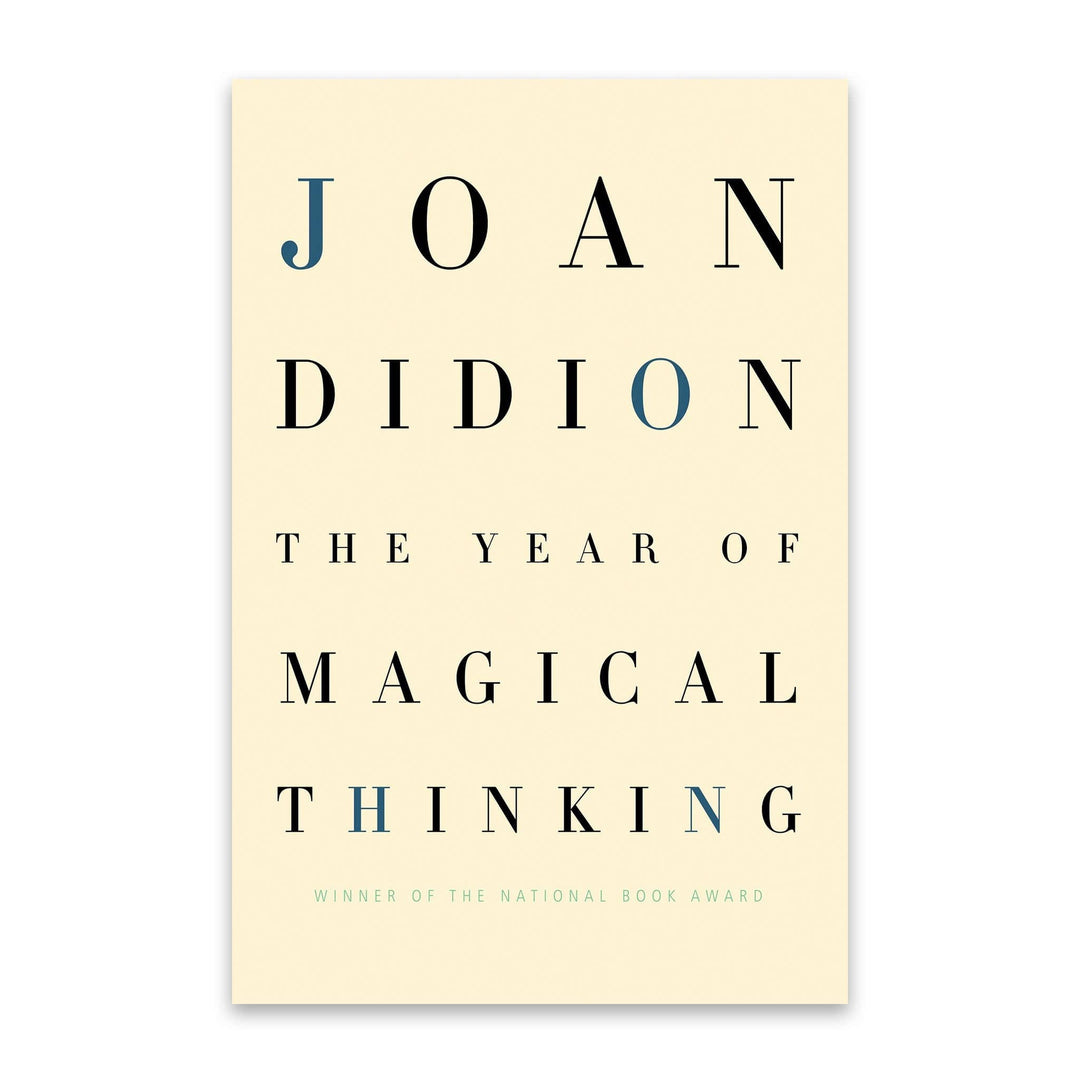
The title of the book refers to magical thinking in the anthropological sense, thinking that if a person hopes for something enough or performs the correct actions, then an unavoidable event can be averted. Didion reports many instances of her magical thinking, particularly the story in which she cannot give away Dunne’s shoes, as he would need them when he returned.[5] The experience of insanity or derangement that is part of grief is a major theme about which Didion was unable to find a great deal of existing literature.[6]
Magical thinking, for the purpose of this essay, is the belief that your thoughts can bring about real change in the world. Sound familiar?
The Secret? The #manifesting? The #mindset?
Now, there is a slippery slope here that must be acknowledged.
In much the same way our oceans contain both deadly, alien trenches and life-giving shallow reefs, or the way a scalpel can remove a tumor or gouge your eyes out, magical thinking contains multitudes. Inherently it is neither good nor bad. The tool is a mirror of the user in that moment.
Think of it this way: you are pinned under a fallen tree. Using a chainsaw to cut the tree will save your life! But if you go using that same chainsaw to cut through any perceived barrier in your life - well, I think you get the idea.
I mentioned last essay without even noticing the connection till now that I’d often find myself having made a circle of books around me:
“It’s how I’ve always coped. Falling asleep in a protective circle of craft supplies and books with my Lab Tia as a 13 year old. Falling asleep in a protective circle of sketchbooks and comics with my Lab Maggie as a 30 year old. God knows I’ll probably die in a protective circle of books and art.”
I remember fifteen years ago, reading the same paragraph over and over, willing myself to not hear the fight happening in the next room (about me) as if it is a spell to transport me anywhere but here.
I remember fifteen days ago, standing in the book section in Target to calm the rising panic from getting overstimulated while grocery shopping.
This book is one in a long line of books that have fallen into my hands and become the bricks in the walls that keep me safe.
This book will save me.
Well, no, actually.
How can you save something when it’s already saved?
First off, if you made it this far: holy shit THANK YOU. Comment below with the book that would save you!!
This essay started out as one line (the title), and quickly spiraled out of control. I hope I haven’t alienating everyone hahaha - this is just what it’s like in the Tower!
Thank you so much for joining me in the Wizard Tower <3 if you want more, catch up on last week’s essay on the two wolves inside of you.
Love y’all deep
-Vero